Referron is the platform for trusted connections and introductions. Create your business card and send it to people you meet. Refer them to people in your network that you know like and trust in seconds. Referron can track your activities - because what you can measure you can manage! This blog will help you as an entrepreneur and business owner to grow with the 5 Cs . Connection, Collaboration, Contribution, Continuity and building Capability to build an amazing Community
As much as people think they do, they don’t really want an easy life. Easy equals mediocre. Mediocre means purgatory to our souls, brains and minds. We thrive on challenge. Our passion is to find innovative means of putting our time productively to work creating lives of purpose and contribution. It’s complex problems at the limit of our known capacity that drives our human spirit. The next time you hear someone say “easy” challenge them to something bigger. They’ll be glad you did.
Group of multi-ethnic business partners discussing ideas
The future of work is changing worldwide. The rise of the 4th Industrial Revolution, advancements in technology and increased automation have led many to doubt whether their current jobs will continue to exist in the years to come.
Intriguingly, jobs in the technology sector are also not spared.
This beckons a number of questions: What will the tech landscape look like for job candidates? More specifically, what skills do tech companies look for when hiring? And how will careers in tech develop over time?
Answering these questions is neither about adding to speculations nor chasing specific trends. Rather, one thing that holds true is that people will need to adapt and embrace change — and for a tech company like OpenLearning, this means hiring candidates who possess certain future-proof traits and values.
1. We believe ‘culture-add’ is greater than ‘culture-fit’
One question we encourage our interviewers and hiring managers to ask is: what diversity of skills, experiences, and thought will this person bring to our team that we don’t already have? In other words, what is their culture-add?
When looking for a new person to join the organisation, we don’t seek people who can merely ‘fit in’ — instead, we want people who can add on to our systems, processes, and behaviours.
Striving to increase workplace diversity is not an empty slogan — it’s a good business decision
More importantly, it enables us to see multiple perspectives, approaches and broaden our knowledge base as an organisation. By considering each candidate’s value in contributing to the team as a whole, we are more likely to build the best team possible.
It also ensures we’re constantly thinking about what new dynamics, values, behaviours and attitudes we’re introducing into our team which will ultimately form the core of our company culture.
2. We seek problem solvers and creative thinkers
With AI predicted to replace between 75 million to 375 million jobs by 2030, problem solving and creative thinking is what will continue to differentiate machines from people.
While we need to ensure people have the technical ability to perform within their roles, it weighs relatively low in comparison to how they approach, shape, and contribute to the broader team and organisation.
Technical skills are important for workplace success, but higher-order thinking skills and interpersonal skills are also key.
For example, it’s one thing to be able to write a piece of code as a Software Engineer, however, it’s quite another to suggest changes to existing architecture, see opportunities for improvement, understand the ecosystem, and propose alternate ways to approach a problem which could minimise user friction or strengthen other parts of our platform.
“Fail fast, and fail often” is an oft-quoted piece of advice in tech — at OpenLearning, we have our own way of saying this through one of our core values: “realising possibilities in a chaotic world”.
Tech is a notoriously fast paced environment which means we can’t afford to wait for solutions. Hence, we need people who view emerging disruptions as opportunities to be harnessed, rather than challenges to be feared.
Beyond creating solutions, we need teams of people with an openness to share their ideas, knowledge and learning. This is crucial particularly for a global company such as OpenLearning, which collaborates across borders. It helps us to ensure that we are aligned, constantly adapting to changes, and staying on track to achieve our company objectives.
4. We look for lifelong learners who aren’t afraid to fail.
As an education tech company, OpenLearning believes in lifelong learning. We want to inspire our people to try new things, voice ideas, share and receive feedback, and let their hunger as well as curiosity for knowledge outweigh any fear of failure.
Why? Because in today’s knowledge economy, learning is more important than ever. Fear holds us back and slows us down, so, if we value seeing the best in each other, we should encourage lifelong learning by creating supportive environments that foster mutual respect and promote self-development. Even in failure, there is an opportunity to learn and gain wisdom.
As writer-philosopher Suzy Kassem puts it, “Fear kills more dreams than failure ever will.”
5. Above all else, are you purpose driven?
Ultimately, when hiring, we look for candidates who are driven by a sense of purpose.
We are an education company driven by a vision to transform the world through social learning. We want to enable access to quality education for everyone. This vision goes beyond profits and revolves around making a positive difference to our world.
Our OpenLearning team during a meeting in Sydney.
In that respect, we want people who are equally driven by a deep desire to contribute to our vision; who choose to use their skills and potential to challenge the status quo; who aren’t afraid to speak up; and subsequently innovate for the betterment of society.
With many questions left unanswered about the future of work and an ever-changing tech landscape, what we can guarantee is our desire to always want purpose-driven people to help change the world.
Are you interested in a career in tech? Let us know in the comments section whether this article has helped you make your application—or even make your decision.
Millennials are different from the Gen-Xers and Baby Boomerswho have a specific set of skills and value systems that have been purposely built for the gig economy ( In a recent study, it was noted that 38% of millennials are freelancing, which is higher than any other age group. )
So what makes the Millennials different?
1. They are“The Connected Generation”
They are digital natives - who are the masters of the technology and social media age.
They have the ability to be in constant communication around the globe with ease, connecting daily with peers, co-workers and industry leaders from their phone.
Social media, across all platforms, has blossomed into an indispensable business tool. becoming the key avenue for businesses to market themselves, their products, and their services.
There are apps by the dozen to help network with professionals in your field. (Referron being up there with the best ;).
Those who understand social media hold the keys to the gig economy.
Millennials value connections, are adept in all things Internet, and have a deep understanding of social media, putting them in an excellent position to lead the way for the future
2. Millennials areSelf-Starters, self empowered and entitled
They are capable of (and willing to) follow their passions, go into business for themselves , and make a living doing so.
Starting your own business is easy - (will a laptop, wifi and a few dollars - you can connect with the world and start trading, but running one successful can be daunting.
Millennials will need the skills necessary to build successfulbusinesses - and will need to build on their soft skills, emotional intelligence, connections and relationshipss
3. Millennials Put a High Value on Quality of Life and balance
Millennials are leaving the “9-5 grind” in droves, not because they are unhappy with the pay, but because they are dissatisfied with the culture. As a generation marked by wanting to make a change, they havestarted with their own lives.
Commuting, office politics, and strenuous work hours may be for some people, but Millennials seem to be looking for a better work-life balance than us baby boomers.
Millennials have watched the world change (9-11, war, the Great Recession of 2008) and have learned how to adapt.
That sense of a firm financial footing that generations before us have had is something Millennials will not have the luxury of, with the average Millennial having 14 changes of career over their working life.
The education system needs to change - with a focus of continual - on the job learning.
Millennials will take in a gig to learn and gain experience rather than hoping for a long term job of financial stability.
They have to thrive on uncertainty, and make a path for themselves. They are the new entrepreneurs that need to be adept atpitching for new jobs and clients - understanding the need for leads proposals and sales.
5. Millennials Have Multiple Passions
Millennials are also defined by their interest in a diverse number of areas, and unprecedented knowledge of subjects gained from the connected world.
The flexibility of the gig economy affords Millennials the opportunities to pursue different avenues of interest, while still focusing on their careers.
Being pigeonholed into one field in which you’ll stay until retirement is a distant memory of the elders.
Gigsters can control their work schedules, not the other way around.
The beauty of being in the gig economy is that you can do it full-time, part-time, or even just on weekends. It’s all up to you!
One thing is clear - the gig economyis the future of the workforce.
It’s all about Education
Heidi Kaye - A Rudolph Steiner school teacher says that Schools for kids past 16 years old will be "co learning spaces" for three hours per day and the rest of the day will be spent doing practical things.
Practical Such as movement (sport, gym, dance) art (paint, design) , building (textiles, wood, metalwork) or other software skills.
It's so obvious that kids leave school without a sense of who they are, their capabilities, What life is really like, or what they can and can't do, and school needs to reflect the innovation/entrepreneur mindset of future work / life.
Continuous Learning programmes that fit with the psychieof the millennial is key.
E’learning, short bursts, gamification and collaboration is the future of education.
Michelle Duval was an informative and inspiring keynote speaker and left the attendees with much to think about regarding the research she has conducted about Entrepreneurs.
A few take-home insights:
Michelle distinguished between Entrepreneurs and Business Builders and their respective attitudes -Entrepreneurs : those leaders who start businesses with a view to exiting within 5 yrs -Business Builders: those leaders who start businesses with view to growing it for 10-15 years
Entrepreneurs’ focus:
24% less on detail 33% more on power 28% less on Procedures 21% more indifferent to rules 34% more on gut feel 41% less on external inputs (except in technology) 40% more initiate to start (critical for early stage success) 44% less structured planning 44% more on $ (love of commercial side of business)
Business Builders’ focus
37% more on structured planning 31% more on procedures
Major differentiator is focus for 1st group on the “Big Picture” . 30% greater focus on this - allowing them to move faster, see opportunities, more rounds of investment, higher revenue, bigger companies.
Also of note was that it is predicted that 1 billion people plan to start businesses in the next 3 years. 98% of these will fails and 60% of these will have failed within 3 years.
44% will be due to poor entrepreneurial leadership and management.
It is clear that one needs different leadership attributes - and attitudes for different phases.
I have attached an article in Harvard Business Review by Rosabeth Moss Kanter which I have used in the past and found helpful for leaders which also focuses on the merits of both big picture and operational thinking. She refers to “Zooming out” (big picture) and “Zooming in” (operational/ planning/ procedural). These lenses through which leaders view the world can help or hinder their ability to make good strategic decisions. Hope you find it helpful - as I did.
Kind regards, Jenny Kahn.
(For those readers who want a copy of the article - put your name down in the comments below and I will send you the link)
As technology, artificial intelligence and machine learning relentlessly drives change, and potentially threaten our livelihoods and jobs - experts are telling us that opportunities are presenting themselves more and more to those that have the strongest advocates, relationships and networks.
Employees are more valuable to employers and have better career options if they have strong relationships and networks.
Those that are in the gig economy survive and thrive based on the power of their relationships, advocates and networks.
Successful business owners, leaders, entrepreneurs and investors have always known that that quality clients and long term profitability come through referrals.
They are feeling the effects of faster, dynamic changes to technology and want bigger, stronger networks that drive referrals and profitability.
Powerful solid networks of advocates that you know like and trust will underwrite your stability and success and is key to avoid becoming just another statistic.
The world is telling us to build our network – but how?
We are all time poor and traditional, one-dimensional networking (the old “let’s meet over coffee!”) requires a lot of effort and for very little result. So what’s the solution?
Technology and social media have created the ultimate networking combination; - however the human touch and for face to face engagement is the key to creating the ultimate network.
Join us for breakfast at bbg (www.bbg.business) to see how we role.
Developing relationships and advocate takes time.
It takes time to get to know, like and trust each other. When that happens - collaboration referrals and advocacy will happen - in abundance!
What would change if you had a (very) large network of people, advocating for you only a few years from now?
Tired of coffee meetings?
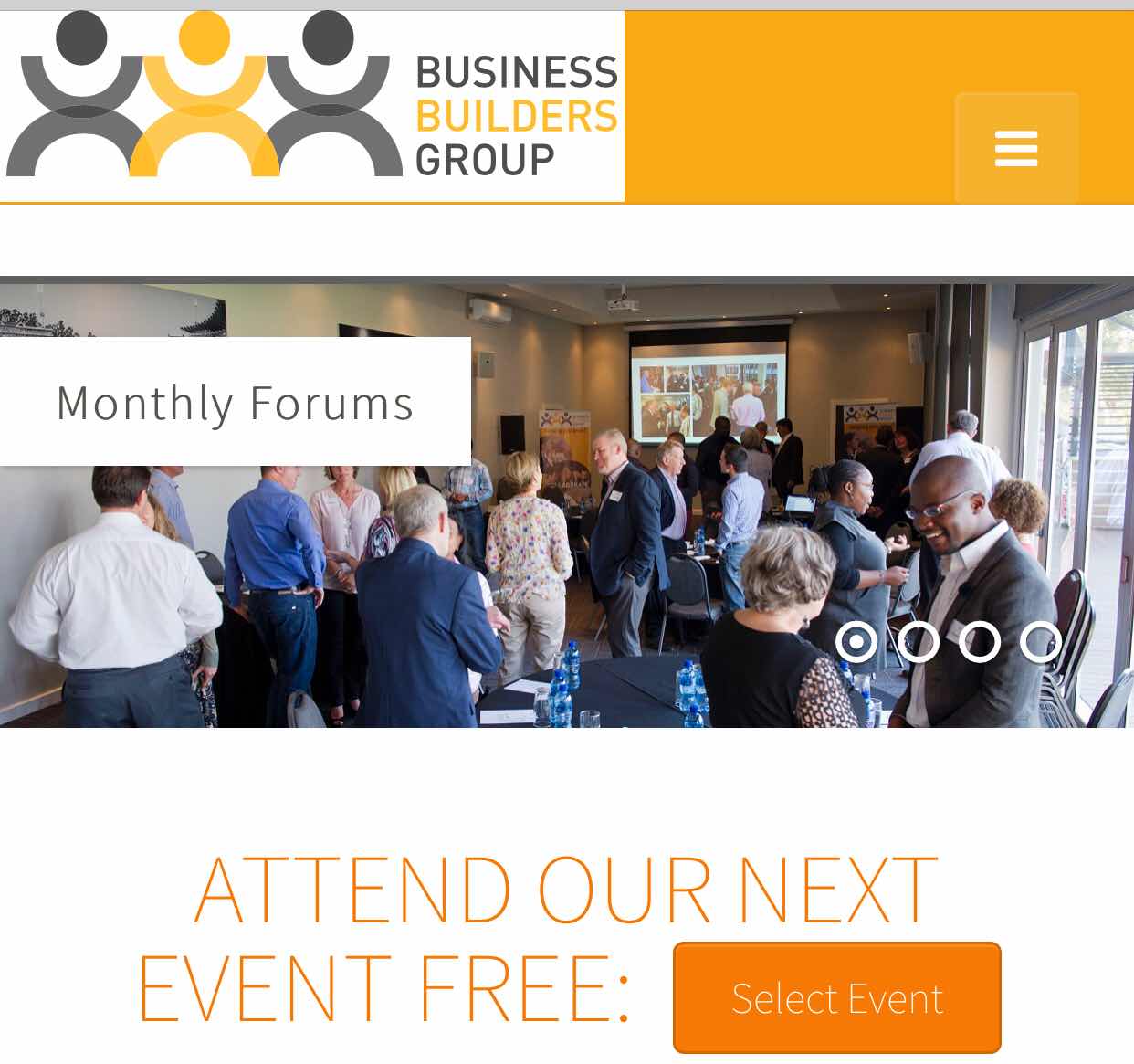
If instead of lots of coffee meetings you choose to grow your new and existing relationships around a ‘hub’; a monthly forum, interesting mastermind lunches and gala events , attended by a community of other, like-minded people individuals who all have a focus of helping you grow your business with a spirit of generosity ?
Then you could get to know the people you have invited and over time introduce them to other connections in your network, who you might have also met at the ‘hub’.
You then become the centre (the ‘hub’) of your relationships; meeting people you believe would be worthwhile adding to your growing network and enabling connection s and introductions. All independently of anyone else who is attending.
What could come from being the ‘Hub’ of your own network?
Through the connection of their own strategic partnerships, many corporates and large businesses are creating their own ‘hubs’ to add more value and stay relevant to their clients and customers. This strategy is a multiplier for results because a larger network creates the opportunity for more leverage and opportunities through the demonstration of adding value; not just saying ‘we do a better job for our clients’ (shouldn’t you be doing a better job anyway?).
By leveraging your time and energy using hubs and events facilitated by BBG, you can collaborate and create your own ‘hub’ connecting and creating opportunities within your network of alliance partners and advocates.
As your network multiplies, so do your opportunities…You have found and created aligned relationships that give you access to 100’s, if not 1000’s of relationships. What could you achieve if you were the “hub” of that sized network?
We will help you create this.
BBG is about meeting with a group of like minded people - where they connect, collaborate, learn and grow using forums, mastermind lunches and gala dinners .
So if you build a network of advocates, will they refer opportunities to you?
Absolutely! When the culture of generosity and advocacy is right - magic happens
If people know like and trust you, and you meet with them regularly - to stay front of mind - they will refer you.
Based on the BBG culture of Generosity, they will want to help you grow.