Monday, October 20, 2025

The Power of Networks: Insights from Liza Garrido, Director of BNI Beyond


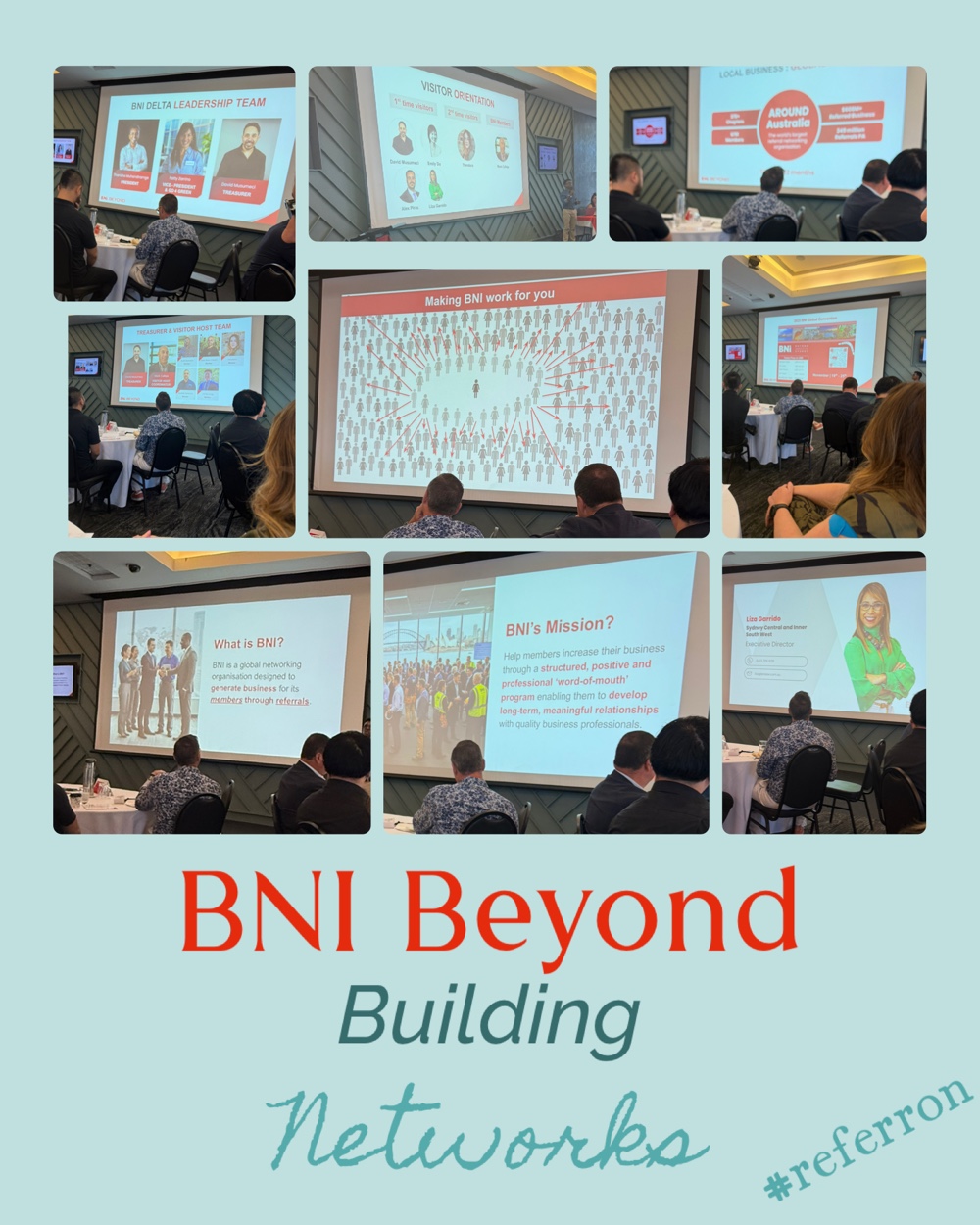
At our recent session, Liza Garrido, Director of BNI Beyond, shared the values and pulse that make BNI one of the world’s most powerful business networks.


One key takeaway stood out clearly:


“Networks beat networking events every time — because BNI is a network.”


BNI isn’t just about attending meetings; it’s about belonging to a trusted ecosystem of professionals who actively help each other grow. As Liza reminded us, when you join BNI, you gain access to a network of people willing to help you — without expecting anything in return.


💎 The Core Values That Drive BNI


At the heart of every BNI chapter are values that foster collaboration, trust, and long-term success:

• Givers Gain — The more you give, the more you receive.

• Building Relationships — Success is built on trust and connection.

• Lifelong Learning — Stay curious and adaptable, especially in an age shaped by AI and change.

• Traditions + Innovation — Honour what works, but be ready to pivot.

• Positive Attitude — Energy attracts opportunity.

• Accountability — Follow through and keep those who refer you informed.

• Recognition — Celebrate others’ achievements — success shared is success multiplied.


As Michael noted during the session, accountability is key:


“When someone gives you a referral, keep them updated — they’ve trusted you with their reputation.”


📚 Why BNI Works


BNI isn’t just a group — it’s your marketing team.

Most of us can’t afford to hire a full-scale marketing department, but by joining BNI, you gain:

• Access to 33 members (and their networks) advocating for you.

• Connection to 675 chapters across Australia and thousands worldwide.

• An exclusive seat in your profession — no direct competitors in your chapter.

• A stream of quality business referrals from people who know, like, and trust you.


It’s not about chasing every customer — it’s about finding the right customer.


BNI members often generate over 50% of their business through the network, a testament to the power of collaboration and trust.


🤝 Beyond Business: A Community of Support


Running a business can be lonely.

BNI provides access to experts, mentors, and peers who understand your challenges — a space where you can share your wins, lessons, and struggles.


When you show up for your chapter, you’re not just building business — you’re building belonging.


🔗 The BNI Ethos and Referron: A Shared DNA of Connection


The principles that make BNI thrive are the same values that power Referron — a platform built to help people connect, collaborate, and contribute with ease.


Where BNI provides the human structure of trust, Referron provides the technology to extend it.


Referron turns every conversation, introduction, and connection into an opportunity — allowing you to:

• Share your digital business card instantly.

• Refer trusted people within your network in seconds.

• Track and follow up effortlessly.


Both BNI and Referron embody the philosophy of “Givers Gain.”

They make generosity practical — transforming goodwill into measurable growth.


Together, they amplify the reach and impact of every relationship —

combining BNI’s community with Referron’s connectivity to build a world where business grows through trust, not transactions.


Networks create growth.

BNI creates community.

Referron makes it effortless.


Thursday, October 16, 2025

AI, Data & the Future of Fitness: From Wearables to Wellbeing


Panelists: Shelley Winter, Amber Taylor, Emmett Williams, Mohammed Iqbal #sxsw2025


Theme: How AI, data, and community are redefining health, fitness, and human connection


1. From Solo Tracking to Shared Motivation


One of the biggest revelations of the panel was the power of community in fitness. As Emmett Williams from ABC Fitness noted, simply being in a room with others can increase effort by up to 14%. Movement, when shared, becomes a multiplier.


Amber Taylor of Les Mills added that the intersection of digital and live experiences—from wearables to group training—creates an ecosystem of accountability. The hybrid model, where wearables track progress and communities cheer each other on, turns individual goals into collective wins.


2. The Psychology of Belonging


Business psychologist Shelley Winter reframed fitness through three psychological needs

  • Belonging – we thrive in teams and communities.
  • Autonomy – choice in how and when we move builds sustainability.
  • Capability – seeing progress reinforces confidence.


In an era of remote work and digital isolation, this sense of belonging may be the missing ingredient. AI tools like Referron and community platforms can bridge digital and human connection—helping people form habits that last.


3. Data, Discipline, and Dopamine


Mohammed Iqbal, founder of SweatWorks and Chief Strategy Officer at ABC Fitness, reminded the audience that what you can measure, you can manage.


From the Nike FuelBand to the Apple Watch, fitness technology has evolved from manual pedometers to cloud-connected sensors. The challenge, Iqbal said, is not more data—but meaningful data that drives behavior.


“Close your rings, hit your goals, earn your dopamine,” he joked—explaining how gamification, leaderboards, and reward systems tap into human psychology to sustain momentum.


4. Rethinking the Health Model


The conversation turned to policy and public health. Iqbal shared insights from the White House Roundtable on Health, where he advocated for flipping the traditional food pyramid and making healthy choices cheaper and easier.


He warned that algorithms, subsidies, and profit incentives often favor unhealthy outcomes: “We’ve built a system that rewards profit, not health.”


He also challenged governments and the fitness industry to integrate continuous health tracking—not just annual checkups—using AI-driven data to spot risks early and personalize interventions.


5. The Gender and Data Gap


Amber Taylor highlighted a critical issue: most health research historically excluded women, with much of the data since the 1990s based on male subjects or even male lab rats.


AI, if trained on biased datasets, risks reinforcing these gaps. “It’s not about more data—it’s about better data,” said Taylor. She emphasized the need for peer-reviewed, transparent, and inclusive data sources to ensure that AI recommendations reflect real diversity.


6. From Steps to Sentiment


The myth of “10,000 steps a day,” born as a marketing slogan during the 1964 Tokyo Olympics, shows how storytelling shapes behavior.


Today, fitness is entering the era of emotion-aware AI—where sentiment tracking, mood analysis, and journaling apps help users understand the link between mind and movement.


But as Shelley Winter warned, there’s a fine line between empowerment and surveillance. “We must use data for good, not control,” she said. Consumer confidence and data ethics are essential for sustained adoption


7. Building Habits, Not Just Apps


The panel agreed: habit formation is the holy grail.

Start small—five minutes a day. Build streaks. Reward progress. Then grow.


Emmett Williams explained the psychology: external rewards (leaderboards, badges, Referron-style recognition) build early engagement, while intrinsic rewards—enjoyment, mastery, belonging—sustain long-term behavior.


“When you miss two workouts, you feel it. The goal is to make showing up your default,” he said


8. AI, Data & the Future of Fitness: From Wearables to Wellbeing


AI’s true potential in fitness lies not just in predicting health metrics—but in creating human motivation.

Platforms like Referron, which gamify connection and recognition, can extend beyond business networking into wellness—rewarding people for consistency, referrals, and shared challenges.


The future of health will be connected, gamified, and community-driven—powered by data, but defined by human belonging


Key Takeaway


“It’s not about more tech. It’s about more connection.”

— Shelley Winter


When AI meets empathy, and data meets discipline, we don’t just get fitter—we build healthier, more connected communities.